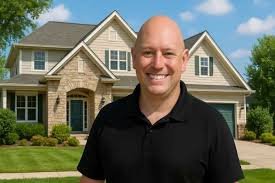
Featured Answer: Virginia homebuyers can buy with 0% down (VA loan), 3% down (Conventional 97 or HomeReady), or 3.5% down (FHA, 580+ credit score). An independent broker shops hundreds of wholesale lenders to match you with the best program and rate. The NoTouch Credit Pull delivers a soft credit pull mortgage pre-approval with no hard inquiry.
Updated October 2026. Buying a home in Virginia doesn’t require draining your savings. Whether you’re eyeing a townhome in Short Pump, a colonial in Chesterfield, or a starter home near Hampton Roads, the 20% down myth stops too many qualified buyers from starting. Retail lenders like Rocket Mortgage, Freedom Mortgage, and PrimeLending can only offer their own product menu; an independent broker accesses hundreds of wholesale lenders, which means more programs, sharper pricing, and more creative solutions for buyers who want to minimize upfront cash.
Better Mortgage Rates and Duane Buziak (NMLS #1110647), operating through Coast2Coast Mortgage LLC (NMLS #376205), bring that advantage to homebuyers across Virginia, Florida, Tennessee, and Georgia. Duane is VA Broker of the Year 2024 and 2025, a Scotsman Guide Top Originator in 2025 ($44.4M) and 2026 ($51.2M), a UWM PRO ELITE 2025 designee, and a Top 1% Nationwide originator. Add the NoTouch Credit Pull and you can get pre-approved and shop rates without a hard inquiry. Whether you call it a soft credit pull mortgage, no hard inquiry mortgage pre approval, mortgage pre approval without hard pull, soft pull mortgage broker approach, or a no credit hit mortgage application, the result is the same: full information, zero credit risk. Check Live Rates for today’s current mortgage rates.
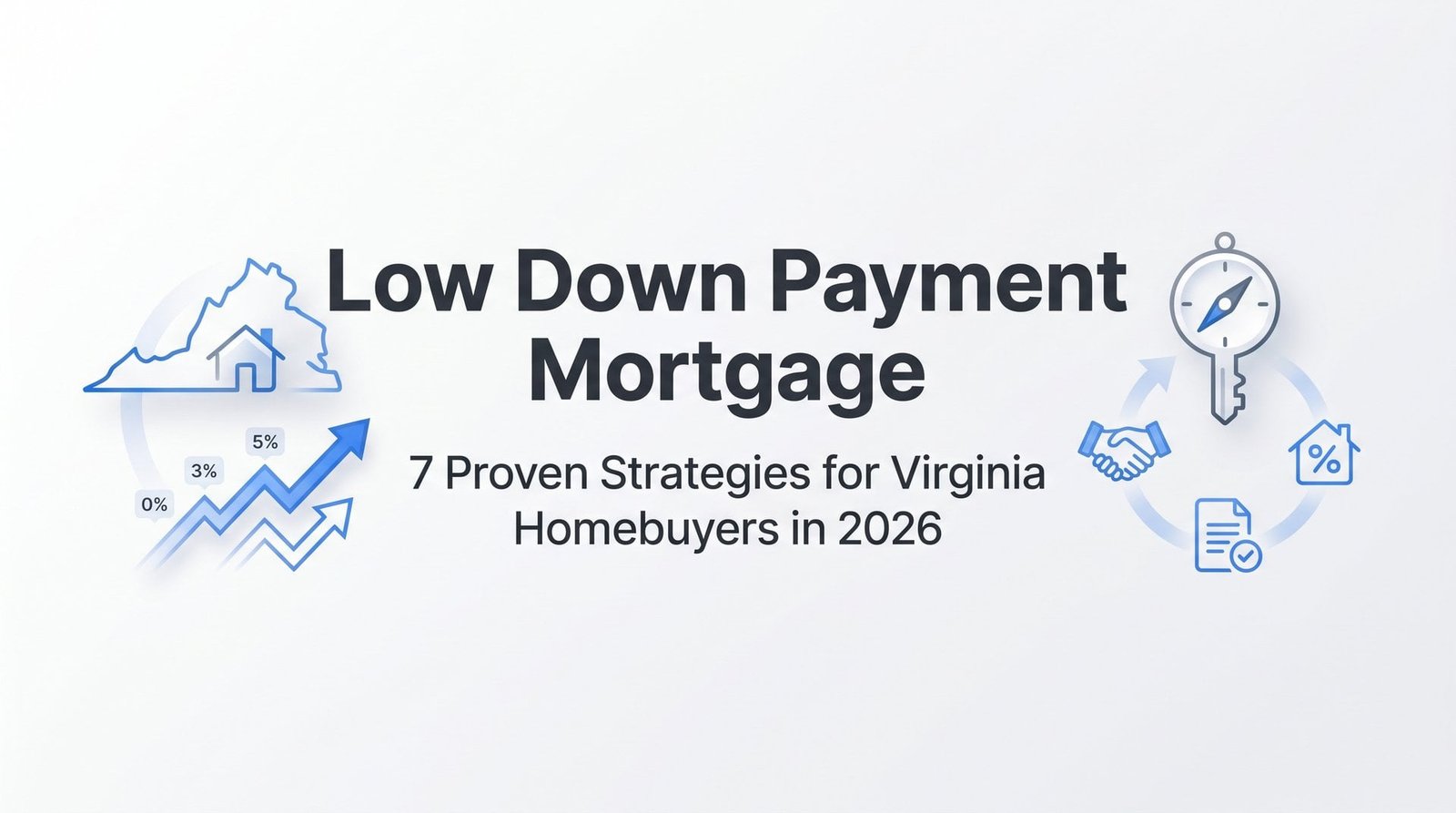
Here are seven proven low down payment mortgage strategies, along with direct comparisons showing why your lender choice matters just as much as your loan program choice.
1. Leverage FHA Loans for 3.5% Down — and Why Your Lender Choice Matters
The Challenge It Solves
FHA loans are one of the most accessible paths to homeownership for buyers who don’t have a large down payment saved up. Per HUD guidelines, borrowers with a credit score of 580 or higher can qualify for just 3.5% down. But here’s what most buyers don’t realize: the FHA sets the minimum requirements, not the rate. Two lenders offering the same FHA loan can have meaningfully different interest rates, and that difference compounds over a 30-year term.
The Strategy Explained
FHA loans are government-insured, which means any approved lender can offer them, but each lender prices them differently based on their own cost structure, margin, and wholesale relationships. When you go directly to Rocket Mortgage or PrimeLending for an FHA loan, you’re getting their rate. When you work with an independent broker like Better Mortgage Rates, you’re getting the best rate from across hundreds of FHA-approved wholesale lenders. On a home purchase in Richmond or Fredericksburg, that difference in rate can translate to hundreds of dollars per year in savings.
Implementation Steps
1. Confirm your credit score is at or above 580 to qualify for the 3.5% down option. Scores between 500 and 579 require 10% down per FHA guidelines.
2. Use the Free NoTouch Credit Solution at Better Mortgage Rates to get pre-qualified without a hard inquiry hitting your credit report.
3. Ask your broker to present FHA rate quotes from multiple wholesale lenders side by side so you can see exactly how much you save by shopping rather than settling.
Pro Tips
FHA loans include a mortgage insurance premium, both upfront and annual. When comparing FHA offers across lenders, always compare the full payment including MIP, not just the interest rate. An experienced broker will walk you through the true total cost comparison so nothing catches you off guard at closing.
2. Conventional 3% Down Programs Most Big Lenders Won’t Highlight
The Challenge It Solves
Many buyers assume FHA is their only low down payment option, but Fannie Mae’s Conventional 97 program and Freddie Mac’s Home Possible program both allow eligible borrowers to put down just 3%. In certain scenarios, these programs can actually beat FHA on total cost because conventional loans don’t carry the same lifetime mortgage insurance structure. The problem is that some retail lenders steer buyers toward FHA without fully exploring whether a conventional option would serve them better. Understanding the key differences between FHA vs conventional loans is essential before committing to either path.
The Strategy Explained
Conventional 97 and HomeReady loans from Fannie Mae, along with Home Possible from Freddie Mac, are designed for creditworthy buyers who simply haven’t accumulated a large down payment. If your credit score is strong, a conventional 3% down loan may carry lower long-term costs than an FHA loan, particularly because conventional mortgage insurance can be cancelled once you reach 20% equity. Lenders like CrossCountry Mortgage or Guild Mortgage may not proactively compare these options for you. An independent broker runs the numbers across both program types before making a recommendation.
Implementation Steps
1. Have your broker compare an FHA 3.5% down scenario against a Conventional 97 or HomeReady 3% down scenario using your actual credit profile and target purchase price.
2. Pay attention to the long-term mortgage insurance comparison, not just the upfront payment difference.
3. If you’re buying in areas like Goochland, Louisa, or Caroline County, ask specifically about income limit thresholds for HomeReady and Home Possible, as these programs have geographic and income eligibility factors.
Pro Tips
Conventional 3% programs often require first-time homebuyer status or income at or below area median income levels. Your broker should verify your eligibility before building your strategy around these programs. Don’t assume you don’t qualify without checking first.
3. Use VA Loans for True 0% Down — Without Being Locked Into Veterans United
The Challenge It Solves
Virginia has one of the largest concentrations of active-duty military and veterans in the country. The Hampton Roads region alone is home to Naval Station Norfolk, Joint Base Langley-Eustis, and several other major installations. For eligible veterans, active-duty service members, and surviving spouses, the veteran home loan is the single most powerful mortgage product available. It requires zero down payment, carries no private mortgage insurance, and is backed by the Department of Veterans Affairs. The challenge is that many military families default to Veterans United simply because of name recognition.
The Strategy Explained
Veterans United is a large retail lender that specializes in VA loans, but it’s still a single-lender operation. Per VA.gov guidelines, any VA-approved lender can offer this program, and rates vary across lenders just as they do with FHA and conventional products. An independent broker with access to hundreds of wholesale lenders can shop VA loan rates on your behalf, often finding more competitive pricing than a single-source lender can offer. If you’re buying in Chesapeake, Newport News, Yorktown, or Suffolk, this comparison shopping can make a real difference in your monthly payment.
Implementation Steps
1. Obtain your Certificate of Eligibility (COE) from the VA or ask your broker to pull it on your behalf through the VA’s automated system.
2. Get pre-qualified using the Free NoTouch Credit Solution so your credit score isn’t dinged while you compare options.
3. Ask Better Mortgage Rates to present wholesale VA loan quotes from multiple lenders so you can compare total loan costs, not just the headline rate.
Pro Tips
The VA funding fee is a one-time cost that varies based on your down payment amount, loan type, and whether you’ve used your VA benefit before. Putting even a small amount down can reduce the funding fee. Your broker should model out the scenarios so you can make the most informed decision for your situation. Active-duty service members should also explore military home loan benefits specific to their branch and duty station.
4. Negotiate Seller Concessions to Cover Your Upfront Costs
The Challenge It Solves
A low down payment handles the equity portion of your upfront costs, but closing costs are a separate line item that can add up quickly. For buyers in markets like Midlothian, Henrico, or Hanover, closing costs can represent a meaningful amount of cash that competes with your down payment savings. Seller concessions are a legitimate, widely-used strategy to shift some of those closing costs to the seller, effectively reducing your total out-of-pocket to near zero when combined with a low down payment loan.
The Strategy Explained
Federal program guidelines allow sellers to contribute toward a buyer’s closing costs, up to defined limits. Per Fannie Mae and Freddie Mac guidelines, conventional loans allow seller concessions of 3% to 6% depending on your down payment percentage. FHA allows up to 6% of the sale price in seller concessions. VA loans allow up to 4% in seller concessions. The art is in structuring the offer correctly so the seller is motivated to accept while the concession covers your costs. Learning proven strategies to reduce your mortgage closing costs can help you keep more cash in your pocket at the closing table.
Implementation Steps
1. Work with your broker to calculate your estimated closing costs before making an offer, so you know exactly how much in seller concessions to request.
2. Structure your offer price and concession request in a way that remains competitive without pricing yourself out of the deal.
3. Confirm with your broker which concession limits apply to your specific loan program before finalizing the offer.
Pro Tips
In a competitive market, asking for seller concessions can sometimes weaken an offer. Your broker should help you weigh whether to request concessions upfront or use a lender credit strategy instead, which we’ll cover in the next section.
5. Stack Lender Credits with Low Down Payment Programs
The Challenge It Solves
Even with a low down payment loan and seller concessions, some buyers still find themselves short on cash at closing. Lender credits offer another lever to pull. By accepting a slightly higher interest rate, you can receive a credit from the lender that offsets your closing costs. The challenge is that this trade-off only makes sense in specific scenarios, and you need access to multiple lenders to find the best credit offers available.
The Strategy Explained
Lender credits work as the inverse of paying discount points. Instead of paying upfront to lower your rate, you accept a marginally higher rate in exchange for cash back at closing. When stacked with a low down payment loan, this strategy can reduce your out-of-pocket costs significantly. The key is comparison. Different wholesale lenders price lender credits differently, and the only way to find the best combination of rate and credit is to shop across multiple lenders simultaneously. Applying effective mortgage rate comparison strategies is the only way to ensure you’re getting the most favorable terms available.
Implementation Steps
1. Ask your broker to model the break-even analysis for lender credits: how long would it take for the higher rate to cost more than the credit saves you upfront?
2. If you plan to sell or refinance within a few years, lender credits often make strong financial sense because you benefit from the upfront savings before the rate difference accumulates.
3. Have your broker run this comparison across multiple wholesale lenders to identify which one offers the most favorable credit-to-rate trade-off for your loan amount and program.
Pro Tips
Lender credits and seller concessions can sometimes be combined, but total credits cannot exceed your actual closing costs. Your broker will ensure the structure is compliant with program guidelines while maximizing your benefit.
6. Get Pre-Qualified Without a Credit Hit — A Competitive Edge Others Can’t Match
The Challenge It Solves
Here’s a scenario that plays out constantly: a Virginia homebuyer starts shopping for a mortgage, applies with two or three lenders to compare rates, and ends up with multiple hard inquiries on their credit report. Each hard inquiry can reduce their score, sometimes by enough to push them into a different rate tier. By the time they find the right lender, their credit profile looks different than when they started. This is an entirely avoidable problem, and it’s one that most major lenders, including Rocket Mortgage, Movement Mortgage, and Embrace Home Loans, don’t solve for you.
The Strategy Explained
Better Mortgage Rates offers a Free NoTouch Credit Solution that allows you to get pre-qualified without any hard inquiry hitting your credit report. This means you can explore your options, understand which programs you qualify for, and review rate scenarios without any credit score impact. Buyers who want to understand their no credit check mortgage options will find this approach especially valuable during the early shopping phase. Whether you’re a first-time buyer in Glen Allen or a move-up buyer in Charlottesville, starting with a credit-safe pre-qualification puts you in a stronger position from the very first conversation.
Implementation Steps
1. Contact Better Mortgage Rates and specifically request the Free NoTouch Credit Solution to begin your pre-qualification process.
2. Provide the basic financial information needed to assess your eligibility for low down payment programs without triggering a hard pull.
3. Once you’ve selected your preferred loan program and lender, authorize the formal credit pull only when you’re ready to move forward with confidence.
Pro Tips
When comparing lenders, ask each one directly: “Is this a hard or soft credit inquiry?” Many lenders pull hard inquiries as a default even for initial consultations. Taking steps to improve your mortgage approval odds before applying can directly affect the rate you qualify for.
7. Work with an Independent Broker Who Shops Hundreds of Lenders
The Challenge It Solves
Every strategy in this guide comes back to the same foundational truth: the quality of your mortgage outcome depends heavily on how many lenders are competing for your business. Retail lenders like NFM Lending, Southern Trust Mortgage, Fairway Independent Mortgage, CapCenter, and RatePro Mortgage each have their own product shelf. When you apply with one of them, you’re choosing from their menu, not from the entire market. For low down payment buyers who need every advantage they can get, this limitation is significant.
The Strategy Explained
An independent mortgage broker operates differently by design. Rather than lending their own money, a broker accesses wholesale lenders on your behalf, presenting your loan file to multiple lenders simultaneously and returning the best combination of rate, program, and terms. This structural difference is not a marketing claim. It’s how the mortgage industry is organized. Better Mortgage Rates, led by Duane Buziak, Virginia’s Mortgage Broker of the Year, brings this wholesale access to homebuyers across Virginia, including markets like Roanoke, Lynchburg, Lake Anna, Albemarle, and Williamsburg, as well as clients in Florida, Tennessee, and Georgia.
Where UWM, Prosperity Mortgage, and Atlantic Bay Mortgage offer you their products, Better Mortgage Rates shops the market on your behalf. For low down payment buyers, that difference in access can mean the difference between qualifying and not qualifying, or between a payment that fits your budget and one that stretches it. If you’re just beginning the process, learning how to qualify for a mortgage with the right broker can set you up for a smoother experience from start to finish.
Implementation Steps
1. Ask any lender you speak with directly: “Are you a retail lender or an independent broker?” This single question clarifies how many lenders are actually working for you.
2. Request a written comparison of at least two or three lender quotes side by side before committing to a loan program or lender.
3. Evaluate not just rate and payment but also lender fees, program availability, and the quality of communication throughout the process.
Pro Tips
The broker relationship also matters when your situation is less than straightforward. Buyers exploring self-employed mortgage options, buyers with recent credit events, or buyers purchasing in rural areas like Caroline County or Louisa often need creative solutions that a single retail lender simply can’t provide. An independent broker with access to hundreds of lenders has far more tools to work with.
Low Down Payment Mortgage FAQs: Your Top Questions Answered
Here are the most common questions Virginia homebuyers ask about low down payment mortgage strategies, the NoTouch Credit Pull, and why working with an independent broker changes your outcome. Structured for quick reference and search engine featured snippets.
- What is the lowest down payment available on a mortgage in Virginia?
- Eligible veterans can purchase with 0% down via VA loan. Non-veterans can access 3% down through Conventional 97 / HomeReady or 3.5% down through FHA (580+ credit score). An independent broker shops all these programs across hundreds of lenders to find the best program-and-rate combination for your specific situation. Check Live Rates for today’s current mortgage rates.
- Can I get a low down payment mortgage without a hard credit inquiry?
- Yes. The NoTouch Credit Pull is a soft credit pull mortgage — a no hard inquiry mortgage pre approval that delivers mortgage pre approval without hard pull. This no credit hit mortgage application lets you explore all low down payment programs and rate scenarios with zero impact to your credit score before committing to any lender.
- What is the difference between FHA, Conventional 97, and VA low down payment loans?
- FHA: 3.5% down, mortgage insurance typically lasts the loan’s life. Conventional 97: 3% down, PMI cancels at 20% equity (better for strong credit). VA: 0% down, no PMI for eligible veterans — the most powerful option available. A broker models all three scenarios using your actual credit profile before recommending a path.
- Why should I use a soft pull mortgage broker instead of applying to a bank directly?
- A soft pull mortgage broker — Duane Buziak (NMLS #1110647), Coast2Coast Mortgage LLC (NMLS #376205) — uses a soft credit pull mortgage to assess your options without impacting your score, then shops hundreds of wholesale lenders simultaneously. VA Broker of the Year 2024 & 2025, Scotsman Guide Top Originator 2025 ($44.4M) & 2026 ($51.2M), UWM PRO ELITE 2025, Top 1% Nationwide: that competitive advantage translates directly to your rate.
- Can seller concessions and lender credits eliminate closing costs on a low down payment loan?
- In many cases, yes. FHA allows up to 6% seller concessions; conventional 3–6% depending on down payment; VA up to 4%. Lender credits can cover remaining costs by accepting a slightly higher rate. A broker shops the most favorable credit-to-rate combination across hundreds of lenders — a single retail lender can only offer their own fee structure.
- What is a no credit hit mortgage application and how does the NoTouch Credit Pull work?
- A no credit hit mortgage application uses a soft inquiry to evaluate your eligibility without affecting your credit. The NoTouch Credit Pull is this process: a mortgage pre approval without hard pull that gives you a complete picture of buying power and program eligibility. A formal hard pull only happens when you’re ready to move forward — fully informed and with the best rate already identified.
Your Low Down Payment Game Plan — Where to Start Today
Securing a low down payment mortgage in Virginia, or in Florida, Tennessee, and Georgia, comes down to three priorities: choosing the right loan program, protecting your credit score during the shopping process, and working with someone who can access the broadest range of lenders on your behalf.
Here’s a quick-start framework based on the strategies above:
If you’re a veteran or active-duty service member: Start with the VA loan comparison. Don’t default to Veterans United without first seeing what wholesale lenders can offer through an independent broker.
If you’re a first-time buyer with a solid credit score: Have your broker compare FHA 3.5% down against Conventional 97 or HomeReady 3% down. The right answer depends on your specific numbers, not a blanket recommendation.
If closing costs are your biggest obstacle: Explore the combination of seller concessions and lender credits before assuming you need more cash saved up. The math often works out better than buyers expect.
Before any of the above: Start with the Free NoTouch Credit Solution. Knowing where you stand without any credit impact is the smartest first move any homebuyer can make.
Unlike Rocket Mortgage, Veterans United, Freedom Mortgage, or any other single-lender operation, Better Mortgage Rates gives you access to hundreds of wholesale lenders through one trusted point of contact. Whether you’re buying in Short Pump, Virginia Beach, Charlottesville, Fredericksburg, or anywhere across the state, Duane Buziak and the Better Mortgage Rates team are ready to build a strategy around your specific situation.
The homebuyers who save the most are the ones who shop the smartest. Learn more about our services and take the first step toward your low down payment mortgage today, without a single point coming off your credit score.