
Owning a duplex, triplex, or fourplex in Virginia is one of those rare financial moves that can genuinely change your trajectory. You live in one unit, collect rent from the others, and use that rental income to help qualify for the mortgage. It sounds almost too good to be true, but it’s a well-established strategy that thousands of Virginia buyers and investors use every year to build wealth while keeping their monthly housing costs manageable.
The challenge? Most lenders treat multi family financing like a checkbox exercise. They run you through a standard application, offer you whatever product sits on their shelf, and send you to closing without ever asking whether a different loan structure might save you thousands over the life of the loan. That’s where working with the right partner makes all the difference.
Better Mortgage Rates, named Mortgage Broker of the Year, takes a fundamentally different approach. With access to hundreds of lenders and a free NoTouch Credit pre-qualification that won’t touch your credit score, Duane Buziak and the team shop the entire market to find the multi family loan that actually fits your situation. Whether you’re eyeing a duplex in Henrico County, a triplex near the Fredericksburg corridor, or a fourplex in Hampton Roads, this guide walks you through everything you need to know before signing anything.
How a Multi Family Loan Actually Works
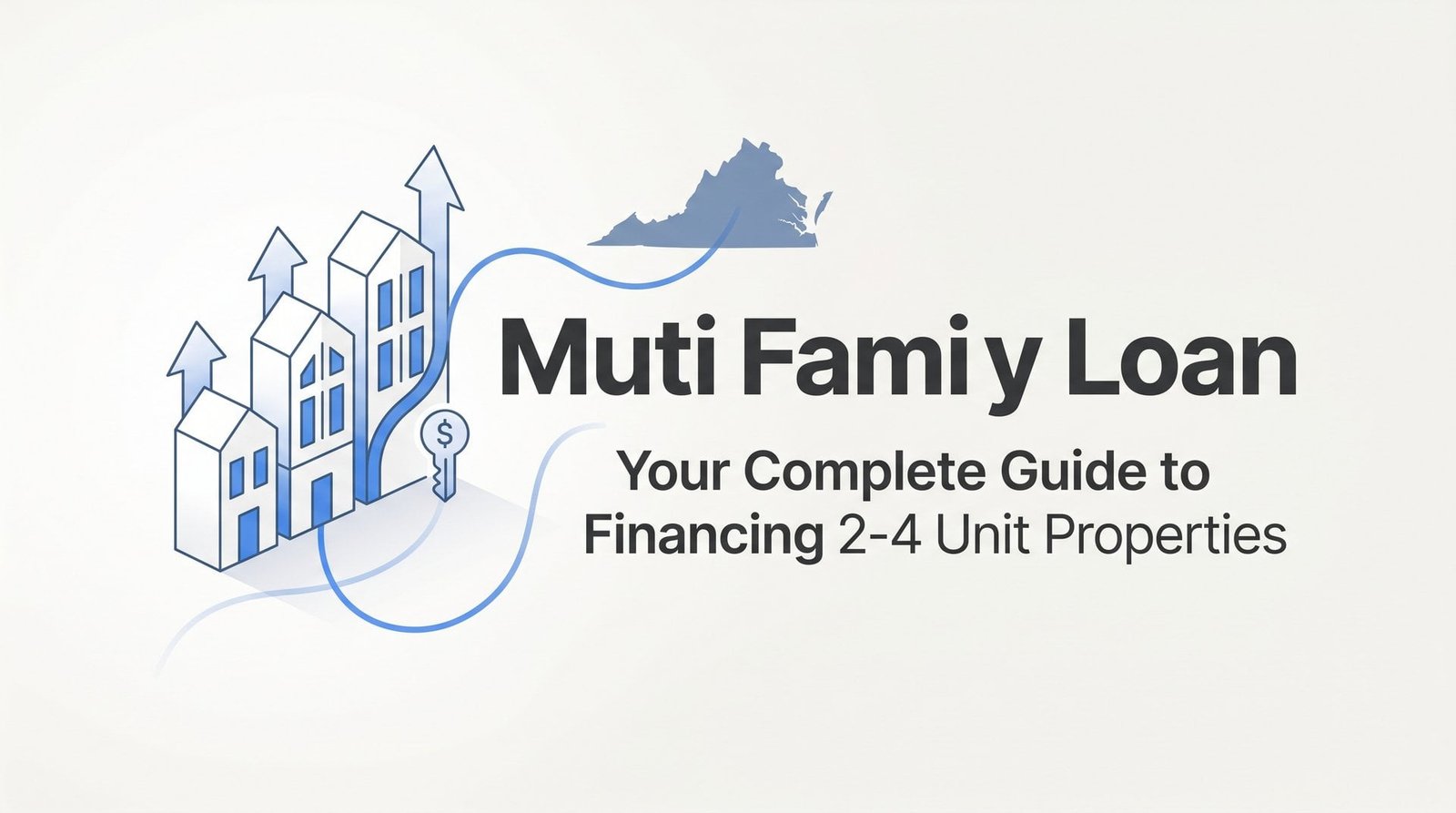
Let’s start with the basics, because there’s a meaningful distinction that catches a lot of buyers off guard. When lenders talk about a “multi family loan” in the residential space, they’re specifically referring to properties with two to four units. Think duplexes, triplexes, and fourplexes. These properties are financed using the same programs available for single-family homes: conventional, FHA, and VA loans. Once you cross into five units or more, you’ve entered commercial real estate territory, which requires entirely different financing products with stricter qualification requirements and higher costs.
This 2-4 unit distinction matters enormously because it keeps the door open to favorable residential loan programs. And within that category, lenders draw another critical line: owner-occupied versus investment-only. Understanding how to qualify for a mortgage under each scenario is essential before you start shopping.
Owner-Occupied Multi Family: You purchase the property and live in one of the units as your primary residence. This is the most borrower-friendly scenario. Lenders view it as lower risk, which translates to better rates, lower down payment requirements, and the ability to count a portion of the rental income from the other units toward your qualifying income. For many buyers, this rental income calculation is what makes the loan possible in the first place.
Investment-Only Multi Family: You purchase the property purely as a rental without occupying any unit. Lenders treat this as higher risk, requiring larger down payments and applying more conservative income qualification standards. DSCR loans, which we’ll cover shortly, were designed specifically to address this scenario in a more practical way.
Virginia’s rental markets make both approaches compelling. The Richmond metro, including Chesterfield, Henrico, and the Short Pump and Glen Allen corridors, has seen consistent rental demand driven by suburban growth and a diverse employment base. Hampton Roads, covering Virginia Beach, Chesapeake, Newport News, and Suffolk, benefits from one of the largest concentrations of military personnel and defense contractors in the country. The Fredericksburg corridor, stretching through Spotsylvania and Stafford, draws renters who work in the broader Central Virginia region. These aren’t transient markets. They’re communities with real, sustained demand for rental housing, which is exactly what you want when you’re building a multi family investment strategy.
The Multi Family Loan Programs Available to You
Not all multi family loans are created equal, and the right program depends heavily on your situation: how much you’re putting down, whether you’ll occupy the property, your credit profile, and how you want to qualify. Here’s a clear breakdown of the main options available to borrowers in Virginia, Florida, Tennessee, and Georgia.
Conventional Multi Family Loans: Backed by Fannie Mae and Freddie Mac guidelines, conventional loans are available for 2-4 unit properties. For owner-occupied purchases, expect a minimum of 15% down on a two-unit property and 25% down on three or four units. Investment properties without owner occupancy typically require 25% or more. Credit requirements are stricter than FHA, but conventional loans avoid mortgage insurance if you reach 20% equity, making them attractive for buyers with solid credit and a meaningful down payment. If you’re weighing your options, our guide on FHA vs conventional loans breaks down the key differences.
FHA Multi Family Loans: The FHA program is a game-changer for owner-occupied multi family buyers who don’t have a large down payment saved. With as little as 3.5% down, you can purchase up to a four-unit property as long as you occupy one unit as your primary residence. FHA also has more flexible credit score requirements than conventional financing, making it accessible to a broader range of buyers. The trade-off is mortgage insurance, which stays for the life of the loan in most cases, but for many buyers the low entry cost outweighs that consideration.
VA Multi Family Loans: For eligible veterans and active-duty service members, the VA loan program extends to multi family properties of up to four units. The requirement is that you occupy one unit as your primary residence. The extraordinary benefit: zero down payment. Given the strong military presence across Hampton Roads, including the Naval Station Norfolk area, Virginia Beach, and Newport News, this is a program that applies to a significant portion of Virginia’s homebuying population. Not every lender offers VA multi family financing with full expertise, which is one reason working with a broker who has access to specialized VA lenders matters.
DSCR Loans: Debt Service Coverage Ratio loans represent one of the fastest-growing product categories in investment real estate financing. Instead of qualifying you based on your personal income, W-2s, or tax returns, the lender evaluates whether the property’s rental income is sufficient to cover the mortgage payment. If the property cash-flows, you qualify. This is particularly valuable for self-employed investors, those with complex income structures, or buyers who want to scale a portfolio without each new property counting against their personal debt-to-income ratio. DSCR loans are offered through non-QM lenders and are typically only accessible through mortgage brokers with broad wholesale networks. This is an area where Better Mortgage Rates has a distinct advantage.
Portfolio Loans: Some lenders hold loans in-house rather than selling them on the secondary market, giving them flexibility to underwrite deals that don’t fit standard guidelines. Portfolio loans can be valuable for multi family buyers with unique situations. Access to these products requires a broker with the right lender relationships.
Loan options and lender availability can vary across Virginia, Florida, Tennessee, and Georgia markets. A broker who actively operates in all four states brings a perspective that a single-state lender simply cannot match.
Why Virginia Buyers Choose Better Mortgage Rates Over the Competition
Here’s a question worth asking directly: why not just go to Rocket Mortgage, Alcova, or CapCenter? They’re well-known names. They have websites and call centers. What’s actually different about working with Better Mortgage Rates for a multi family loan?
The answer comes down to a structural reality in how mortgage lending works.
Rocket Mortgage and national retail lenders offer their own products at their own rates. When you apply with Rocket Mortgage, you’re getting whatever Rocket Mortgage has decided to offer that day. They don’t shop the market for you. They don’t compare their rates against 200 other lenders. They present their options, and you take it or leave it. For a straightforward single-family purchase, that might be acceptable. For a multi family loan, where qualification guidelines, rental income calculations, and rate structures vary significantly from one lender to the next, accepting the first offer you see is a costly mistake. A thorough mortgage rate comparison across multiple lenders can save you tens of thousands over the life of the loan.
Local Virginia lenders like Alcova Mortgage, CapCenter, RatePro Mortgage, Southern Trust Mortgage, and Atlantic Bay Mortgage are retail lenders. They’re single-lender operations. Whatever is on their product shelf is what they can offer you. They may do excellent work within those constraints, but the constraint itself is the problem. When you need a DSCR loan, a specialized VA multi family product, or a lender with favorable rental income calculation guidelines, a retail lender can only tell you whether they have it. If they don’t, you’re starting over somewhere else.
Better Mortgage Rates operates as a mortgage broker, which means the model is fundamentally different. One application. Hundreds of lenders competing for your business. As Mortgage Broker of the Year, the team has wholesale access to a lender network that individual borrowers cannot reach on their own. That network includes lenders with different overlays, different rental income calculation methods, and different pricing structures for multi family properties. The result is a better rate and better terms, not because of luck, but because of competition.
The NoTouch Credit pre-qualification advantage: This is where the comparison gets particularly sharp. Lenders like Movement Mortgage, C&F Mortgage Corporation, and Guild Mortgage typically want to pull a hard credit inquiry before they’ll give you meaningful numbers. That hard pull affects your credit score, and if you’re shopping multiple lenders, multiple hard pulls compound the impact. Better Mortgage Rates offers a free NoTouch Credit pre-qualification that gives you real buying power information with zero credit impact. You can explore your multi family loan options, understand your numbers, and make an informed decision before a single lender touches your credit file. That’s not a gimmick. It’s a genuine advantage that protects your financial position while you’re still in discovery mode.
Q&A: What Virginia Borrowers Ask Before Choosing a Multi Family Lender
These are the questions that come up in almost every multi family conversation. The answers matter, and so does who you’re asking.
Q: Can I use rental income from the other units to qualify for the loan?
Yes, and this is one of the most powerful aspects of owner-occupied multi family financing. Lenders will typically count a percentage of the projected or actual rental income from the non-owner-occupied units toward your qualifying income, which can significantly reduce your effective housing cost and improve your debt-to-income ratio. The catch is that different lenders calculate this differently. Retail lenders like PrimeLending and Fairway Independent Mortgage operate under their own guidelines, which may be more conservative. Because Better Mortgage Rates shops across hundreds of lenders, the team can identify which lenders apply the most favorable rental income calculations for your specific property and market, which can be the difference between qualifying and not qualifying.
Q: What’s the minimum down payment for a multi family property?
It depends on the loan type and whether you’re occupying the property. FHA allows as little as 3.5% down for owner-occupied 2-4 unit properties. VA allows zero down for eligible veterans occupying one unit. Conventional loans require 15% for a two-unit owner-occupied property and 25% for three or four units. Investment-only properties generally require 25% or more under conventional guidelines, and DSCR loans typically require 20-25% down depending on the lender. Not every lender offers all of these programs. Freedom Mortgage and Penny Mac, for example, may specialize in certain loan types but not carry the full spectrum of multi family products under one roof. Working with a broker means you access the full range of loan programs through a single conversation.
Q: Why use a mortgage broker instead of going directly to CrossCountry Mortgage, NFM Lending, or Embrace Home Loans?
This is the core question, and the answer is simple: when you go directly to CrossCountry Mortgage, NFM Lending, or Embrace Home Loans, you’re getting one company’s products at one company’s rates. These are capable lenders, but they’re still retail operations with a fixed menu. A mortgage broker like Better Mortgage Rates submits your scenario to dozens of wholesale lenders simultaneously. Those lenders compete for your business. The best rate and terms win. For a multi family loan, where the difference between lenders can be meaningful over a 30-year term, that competition has real dollar value. Add the personalized guidance from Duane Buziak and the team, and you’re getting expertise plus market access that no single retail lender can replicate.
Q: How does Veterans United compare for VA multi family loans?
Veterans United is a large retail lender focused on VA products. For a straightforward single-family VA purchase, they’re a known quantity. For VA multi family loans, the question is whether their specific guidelines and rates are the best available. As a single lender, they can only offer what they have. Better Mortgage Rates can access multiple wholesale lenders offering VA multi family products and present the most competitive option for your situation as a veteran buyer in Virginia.
Where Multi Family Properties Are Thriving Across Virginia
Geography matters in real estate, and Virginia offers a diverse range of markets where multi family properties make strong investment sense.
The Richmond metro remains one of the most active markets in the state. Henrico County, Chesterfield, and the Short Pump and Glen Allen corridors offer suburban rental demand from a broad employment base. Midlothian attracts families who want suburban quality with rental income supplementing their mortgage. The city of Richmond itself has neighborhoods with strong rental demand driven by universities, healthcare employment, and a growing professional population. Investors looking to build equity through property improvements may also want to explore fix and flip loan options for value-add multi family deals.
The Fredericksburg corridor, covering Spotsylvania and Stafford counties, benefits from its position as a commuter hub for Central Virginia’s broader employment market. Rental demand here is consistent and driven by households seeking more space at accessible price points.
Hampton Roads is arguably Virginia’s strongest multi family market. Virginia Beach, Chesapeake, Newport News, Suffolk, and Yorktown collectively form one of the most stable rental environments in the Southeast, anchored by military installations that create a constant rotation of qualified tenants. For investors, this military-driven rental demand reduces vacancy risk in a meaningful way.
Emerging markets like Charlottesville, anchored by the University of Virginia, Roanoke, and Lynchburg offer multi family opportunities at price points that can deliver strong cash flow relative to acquisition cost. Buyers exploring properties in less densely populated areas should also consider rural home loan options that may apply to certain Virginia locations. These markets are worth watching as Virginia’s growth continues to spread beyond its traditional metro centers.
Better Mortgage Rates also serves multi family borrowers in Florida, Tennessee, and Georgia. For investors who want to build a portfolio across the Southeast rather than concentrating in a single state, having one trusted broker who understands all four markets is a significant operational advantage.
Your Step-by-Step Path to Closing a Multi Family Loan
The process doesn’t have to be complicated. Here’s how it works when you work with Better Mortgage Rates.
1. Start with the free NoTouch Credit pre-qualification. This is where every conversation begins. You share basic financial information, and Duane Buziak and the team assess your buying power for multi family properties without pulling a hard credit inquiry. You walk away knowing what you can realistically afford, which loan programs apply to your situation, and what your approximate monthly payment might look like across different property types. No credit impact. No commitment. Just clarity. Learn more about the mortgage pre-qualification process and how it protects your credit.
2. Property search and loan matching. Once you have a property in mind, or even a general target range, the team goes to work matching your deal with the right lender. This isn’t a generic application sent to one company. It’s a targeted search across hundreds of wholesale lenders to find the one whose guidelines, rental income calculations, and pricing best fit your specific multi family scenario. Whether you need conventional, FHA, VA, DSCR, or a portfolio product, the team identifies the optimal match. Self-employed investors who prefer to qualify without traditional documentation may benefit from a no income verification mortgage approach.
3. Application through closing. Multi family appraisals are more complex than single-family appraisals because they require an income approach valuation in addition to comparable sales analysis. Underwriting scrutinizes rental income projections and property condition more closely. Better Mortgage Rates manages this process, coordinating with appraisers, underwriters, and title companies so you’re not navigating a complex transaction alone. The goal is a smooth closing with no surprises, and the team’s experience with multi family transactions across Virginia and the Southeast means they’ve seen most of the complications before they become problems for you.
The Bottom Line on Multi Family Financing in Virginia
A multi family loan is one of the most strategically sound moves a Virginia homebuyer or investor can make. You build equity, generate rental income, and in many cases reduce your effective housing cost to a fraction of what a single-family home would cost. The math works. The markets support it. The loan programs are accessible.
What separates a good outcome from a great one is who you work with. Going directly to Rocket Mortgage, Alcova, or CapCenter means accepting whatever one lender has to offer. Working with Better Mortgage Rates means accessing hundreds of lenders, each competing to win your business, guided by a team that has earned the title of Mortgage Broker of the Year.
The free NoTouch Credit pre-qualification removes every barrier to getting started. You don’t have to commit. You don’t have to risk your credit score. You just have to start the conversation.
Whether you’re looking at a duplex in Henrico, a triplex in Virginia Beach, or a fourplex in the Fredericksburg corridor, the right multi family loan is out there. Let Better Mortgage Rates find it for you. Learn more about our services and start your free, no-credit-impact pre-qualification today.