
Most homebuyers accept their Loan Estimate as if it were carved in stone. It isn’t. Mortgage fees — origination charges, underwriting fees, title services, and more — are often negotiable, and knowing which ones to challenge can save you hundreds or even thousands of dollars at the closing table.
This guide walks you through exactly how to negotiate mortgage fees, step by step, so you walk in prepared and walk out ahead. We’ll cover how to read your Loan Estimate, which fees are genuinely negotiable versus fixed by law, how to use competing quotes as leverage, and how a soft credit pull mortgage pre-qualification positions you as a serious buyer before you ever sit down at the table.
We’ll also build a full Total Cost of Ownership worksheet so you can see precisely what each fee means to your bottom line — not just your monthly payment. Whether you’re purchasing in Henrico County, Virginia, or refinancing a property in Chesterfield, the same negotiation framework applies. The difference is knowing the playbook before the conversation starts.
By Duane Buziak, NMLS #1110647 | Coast2Coast Mortgage LLC, NMLS #376205
Step 1: Get Your Loan Estimate and Know What You’re Looking At
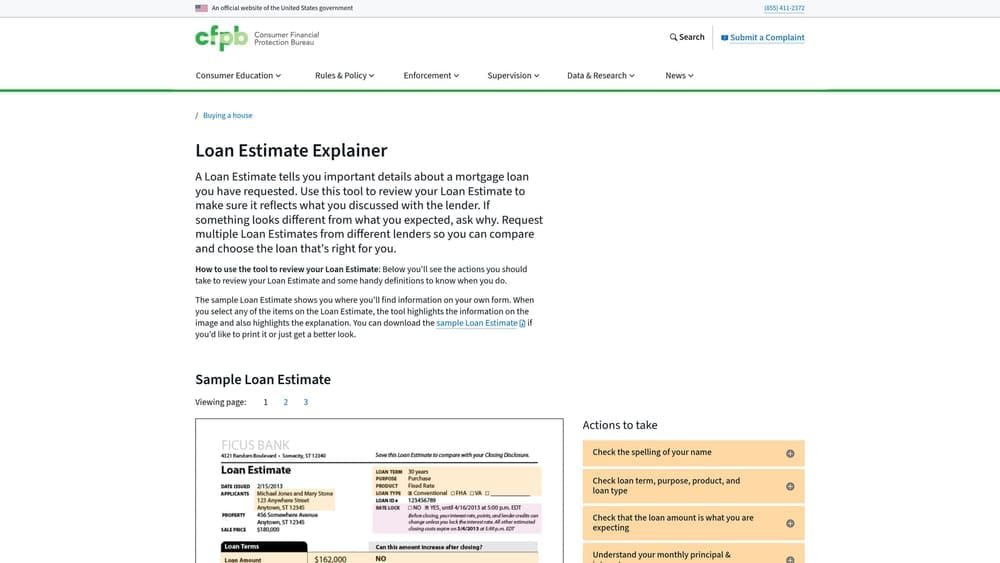
The Loan Estimate is a standardized three-page form required by federal RESPA/TRID rules. Every broker must provide it within three business days of receiving your application. It isn’t a rough ballpark — it’s a structured document with specific fee categories, and understanding those categories is the foundation of every negotiation conversation you’ll have.
Here’s how the sections break down, because not all fees are created equal.
Section A — Origination Charges: This is the broker’s section. Origination fees, underwriting fees, and discount points all live here. These are your primary negotiation targets. Under TRID rules, once your rate is locked, Section A fees have zero tolerance — they cannot increase. That makes them both the most negotiable upfront and the most protected once agreed upon. According to the CFPB’s Loan Estimate explainer, origination charges represent the broker’s compensation and are the single largest variable cost on most Loan Estimates.
Section B — Services You Cannot Shop For: Appraisal fees, credit report fees, and flood determination fees fall here. These are generally set by third-party service providers and are harder to negotiate directly. That said, some brokers absorb appraisal costs as a competitive differentiator — it’s always worth asking. Section B fees can increase by no more than 10% in aggregate between your Loan Estimate and your Closing Disclosure.
Section C — Services You Can Shop For: Title insurance, settlement fees, closing agent fees, and title search costs all live in Section C. This is a shopper’s market. You are legally entitled to choose your own providers for these services, and the price variance between providers for identical services can be significant. Always get competing quotes here.
Before you request any Loan Estimate, know this: you do not need a hard inquiry on your credit report to start the process. Through a no hard inquiry mortgage pre approval process — like the NoTouch Credit soft pull available through Better Mortgage Rates — you can get a real loan scenario in hand without any credit score impact. This means you can request Loan Estimates from multiple brokers and compare them side by side without the anxiety of multiple hard pulls. Learn how the soft credit pull mortgage process works before you begin shopping.
Action item: Request Loan Estimates from at least three brokers using the exact same loan scenario — same purchase price, same down payment, same loan term. Apples-to-apples comparison is the only kind that produces useful leverage.
Success indicator: You have two to three Loan Estimates in hand, all for identical loan parameters, received within a three-business-day window.
Step 2: Build Your Full Cost-of-Ownership Worksheet Before Negotiating
Here’s a mistake nearly every first-time buyer makes: they negotiate the origination fee down by a few hundred dollars while accepting a rate that’s a fraction of a percent higher. Over a 30-year loan, that rate difference costs far more than the fee savings recovered. This is why you build the full picture before you negotiate anything.
Let’s work through a real example using a Henrico County, Virginia purchase so the numbers are grounded in actual local data.
The Scenario: $350,000 purchase price, 10% down payment, 30-year fixed-rate mortgage.
Loan Amount: $315,000 (after $35,000 down payment)
Principal and Interest: Your monthly P&I payment depends on the rate quoted at the time you apply. Request this number from your broker using the actual rate on your Loan Estimate — do not rely on a generic calculator that doesn’t reflect current market conditions. Understanding the key mortgage rate factors that drive your quoted rate will help you evaluate whether the number you’re seeing is competitive.
Property Taxes — Henrico County: The current real estate tax rate in Henrico County is $0.85 per $100 of assessed value, sourced directly from the Henrico County Real Estate Assessments page. On a $350,000 assessed value: ($350,000 ÷ $100) × $0.85 = $2,975 per year, or $247.92 per month. This number goes into your monthly payment calculation regardless of what your broker quotes you — it is a fixed cost of homeownership in this county.
Homeowners Insurance: Annual premiums vary by property age, construction type, and coverage level. Request quotes from at least two insurers before closing — this is a shoppable line item on your Loan Estimate.
PMI — Private Mortgage Insurance: With 10% down, your loan-to-value ratio starts at 90%, which means PMI is required. PMI typically runs between 0.5% and 1.5% of the loan amount annually, depending on your credit profile and the specific loan. On a $315,000 loan at 0.85% annually (a common midrange figure), that’s approximately $2,677.50 per year, or about $223 per month. Your actual rate will appear on your Loan Estimate.
PMI Removal Math: Under the Homeowners Protection Act, your lender must automatically cancel PMI when your loan balance reaches 78% of the original purchase price. You can request cancellation at 80% LTV. On this loan, 80% of $350,000 = $280,000. That means your loan balance must fall from $315,000 to $280,000 — a reduction of $35,000 in principal. On a standard 30-year amortization at current rates, this typically occurs somewhere in the range of years eight through eleven, depending on your rate. Run your specific amortization schedule to identify the exact month. For a deeper look at strategies to eliminate PMI sooner, see our guide on how to avoid PMI on a mortgage.
Your True Monthly PITI + PMI: Add your P&I payment + $248 (property tax) + your insurance estimate + your PMI estimate. This is your real monthly housing cost — not the payment your broker quotes when they mention only principal and interest.
Closing Costs: Total all line items from Section A, B, C, and the prepaid/escrow section of your Loan Estimate. This is the out-of-pocket figure you’re negotiating to reduce.
Action item: Build this worksheet for your specific purchase price and county before any negotiation conversation. It tells you exactly how much a fee reduction is worth in real dollars relative to the full cost of the loan.
Success indicator: You can state your true all-in monthly cost and total closing costs to the dollar — not just the P&I payment.
Step 3: Identify Which Fees Are Actually Negotiable
Not every line on your Loan Estimate is up for discussion. Some fees are set by government entities, some by regulated third parties, and some are entirely at the broker’s discretion. Knowing the difference before you sit down to negotiate prevents wasted energy and keeps the conversation focused on where real savings exist.
Here’s the complete fee-by-fee breakdown:
Origination Fee | Section A | Negotiable: This is the primary target. It represents the broker’s compensation for originating the loan. Ask directly for a reduction or waiver, especially if you have a competing Loan Estimate showing a lower figure. Our dedicated guide to the mortgage origination fee breaks down exactly what this charge covers and what a reasonable range looks like.
Underwriting Fee | Section A | Negotiable: This fee is often padded beyond the actual cost of underwriting. Comparing it across two or three Loan Estimates will show you immediately if one broker is inflating it. Use that comparison as leverage.
Discount Points | Section A | Negotiable: Paying points is a choice, not a requirement. One discount point equals 1% of the loan amount — on a $315,000 loan, that’s $3,150 upfront. Whether paying points makes sense depends entirely on your break-even math, which we cover in Step 4. You can also review our dedicated guide on whether mortgage points are worth it.
Appraisal | Section B | Rarely Negotiable: Set by an Appraisal Management Company (AMC), not the broker. Some brokers cover this cost as a competitive offering — worth asking about, but don’t count on it.
Credit Report | Section B | Not Negotiable: This is a regulated cost passed through at actual expense.
Lender’s Title Insurance | Section C | Shop It: Required by the broker, but you choose the provider. Price variance between title companies for the same coverage can be meaningful — always get competing quotes.
Owner’s Title Insurance | Section C | Shop It: Optional in most states but strongly recommended.
Settlement/Closing Fee | Section C | Shop It: Whether paid to a real estate attorney or a title company, this fee is competitive. Two providers quoting on the same transaction can differ by hundreds of dollars for identical services.
Recording Fees | Government | Not Negotiable: Set by the county. Fixed.
Transfer Taxes | Government | Not Negotiable: Set by state and county. Fixed.
Prepaid Interest | Prepaid | Not Negotiable: Determined by your closing date. Closing at the end of the month minimizes this cost — a real savings on larger loan amounts.
One category deserves special attention: junk fees. These are line items with vague labels — “admin fee,” “processing fee,” “document prep fee” — that have no regulatory basis and represent pure margin for the broker. They appear in Section A and are fully negotiable. If a fee on your Loan Estimate doesn’t have a clear explanation, ask what it covers. If the answer is unsatisfying, ask for it to be removed.
Action item: Take a highlighter to every Section A fee and every Section C fee on each Loan Estimate you’ve collected. These are your negotiation targets. Everything else is either fixed or outside the broker’s control.
Success indicator: You have a clear, itemized list of which fees to challenge and which to accept as given.
Step 4: Use Competing Quotes as Your Negotiation Leverage
Here’s the dynamic that makes mortgage fee negotiation work: brokers know you have options. A competing Loan Estimate isn’t a threat — it’s information. Presenting it professionally, not adversarially, is what produces results.
The script is simple: “I have another Loan Estimate showing a lower origination fee on the same loan parameters. Can you match or beat it?” Specific, factual, unemotional. That’s the posture that gets responses.
But before you make that call, use your TCO worksheet from Step 2 to evaluate the full trade-off. Sometimes a broker will reduce fees while nudging the rate slightly higher. Whether that’s a better deal depends entirely on how long you plan to hold the loan. A lower rate wins over a long hold period. Reduced fees win if you’re likely to refinance or sell within a few years. The worksheet tells you which scenario you’re in. Our guide on how to compare mortgage lenders walks through exactly how to structure this side-by-side evaluation.
The Discount Points Break-Even: If a broker offers to lower your rate by paying one discount point, here’s how to evaluate it. On a $315,000 loan, one point costs $3,150 upfront. Divide that cost by the monthly payment reduction the lower rate produces. The result is your break-even month. If you plan to keep the loan longer than that, paying the point saves money. If not, keep the cash. Apply this math to your actual quoted rate reduction — do not use generic estimates. For a deeper breakdown, our guide on mortgage rate buydown walks through the calculation in detail.
The Broker Structural Advantage: A mortgage broker who shops hundreds of lenders simultaneously has an inherent pricing advantage over a single retail bank. When one institution sets its rate and fee schedule, that’s the only offer on the table. When a broker accesses a wide wholesale network, the competition among lenders produces better pricing before you even start negotiating. This structural difference is why working with a broker rather than going directly to a single institution often produces lower total costs, even before any negotiation takes place.
The Soft-Pull Shopping Advantage: Because the NoTouch Credit process at Better Mortgage Rates uses a Vantage Score 4.0 soft pull, you can shop multiple brokers for competing quotes without triggering multiple hard inquiries. Under standard FICO scoring, multiple mortgage inquiries within a 14 to 45-day window are typically treated as a single inquiry — but that still requires a hard pull at each stop. With a mortgage pre approval without hard pull, you gather the competing Loan Estimates you need without any credit score exposure at all. Learn more about getting a mortgage without hurting your credit score.
Action item: Contact your preferred broker with the competing Loan Estimate in hand and request a fee match in writing. A verbal agreement is a starting point — a revised Loan Estimate is the confirmation.
Success indicator: You receive a revised Loan Estimate or a written commitment to match specific line items from a competing quote.
Step 5: Negotiate Title and Third-Party Fees Separately
Most buyers focus their negotiation energy entirely on the broker’s Section A fees and walk away from the table leaving significant money on the table in Section C. Third-party and title fees are often where the largest dollar savings hide — and they require a completely separate conversation with completely different providers.
Title Insurance: The lender’s title policy is required — your broker will not close without it. The owner’s title policy is optional in most states but strongly recommended, since it protects your equity rather than the broker’s loan. Both are shoppable. Contact two or three title companies or real estate attorneys with the property address and loan amount, and request itemized quotes. The price for the same coverage from different providers can vary meaningfully, and there’s no quality difference in the underlying protection.
Settlement and Closing Fees: The settlement or closing fee — paid to the attorney or title company handling the transaction — is a competitive-market service. Two providers quoting on the same closing can differ by hundreds of dollars for identical work. This is not a case where a higher price signals better service. Shop it the same way you’d shop any professional service: get at least two quotes and compare line by line. Understanding what to expect at each stage is easier when you’ve reviewed what happens after mortgage approval — our closing roadmap covers the full sequence from approval to signing.
HOA Transfer and Estoppel Fees: If the property is in a homeowners association, transfer fees and estoppel fees may appear on your Closing Disclosure. These are set by the HOA, not the broker, and are generally non-negotiable. However, knowing them in advance prevents closing-day surprises. Ask your real estate agent to request the estoppel letter early in the transaction.
Homeowners Insurance as a Shoppable Prepaid: Your homeowners insurance premium appears in the prepaid section of your Loan Estimate. Shopping your insurance policy independently — rather than accepting whatever the broker’s preferred provider quotes — can reduce this line item.
Seller Concessions: In some market conditions, negotiating seller-paid closing costs is more effective than negotiating with the broker. In a buyer’s market or with a motivated seller, asking the seller to contribute toward closing costs — structured as a seller concession in the purchase contract — can offset thousands of dollars in fees without requiring any negotiation with your broker at all. This strategy works best when the seller has flexibility on net proceeds and the market isn’t highly competitive. A no closing cost mortgage is another structure worth understanding when evaluating how to minimize out-of-pocket costs at closing.
Action item: Request itemized quotes from at least two title and settlement providers and compare them against the estimates on your Loan Estimate. Every dollar below the original estimate is a real savings.
Success indicator: You’ve reduced at least one Section C line item below the original Loan Estimate figure through independent shopping.
Step 6: Lock Your Rate Strategically and Confirm the Final Numbers
Everything you’ve negotiated to this point becomes binding — and protected — the moment you lock your rate. Understanding what that lock means, and what happens in the days before closing, is the final piece of the negotiation framework.
What the Rate Lock Does: Once your rate is locked, Section A origination fees on your Loan Estimate are binding with zero tolerance under TRID rules. They cannot increase. This is your protection against fee creep — the frustrating practice of fees mysteriously growing between application and closing. Get your negotiated fees confirmed in writing before you lock, because the lock is what enforces them.
The Closing Disclosure Review: You’ll receive your Closing Disclosure at least three business days before closing. This is not a formality — it’s a critical document. Compare it line by line to your Loan Estimate. Under TRID, Section A fees cannot increase at all after rate lock. Section B fees (services you cannot shop for) cannot increase by more than 10% in aggregate. Section C fees have no cap if you chose a provider not on the broker’s list, but zero tolerance if you used the listed provider. Reviewing the Good Faith Estimate breakdown alongside your Closing Disclosure gives you a clear framework for spotting any discrepancies.
If any fee on your Closing Disclosure exceeds the tolerance, you have the right to challenge it. Ask your broker to cure the overcharge before closing. This is not an unusual request — it is your legal right under federal disclosure rules.
Closing Date Timing: Here’s a practical savings tip that costs you nothing: closing at the end of the month minimizes prepaid daily interest. Prepaid interest covers the days from your closing date to the end of that month. Close on the 29th instead of the 1st, and you owe two days of prepaid interest instead of thirty. On a $315,000 loan, that difference is real money. Ask your broker to calculate both scenarios if you have flexibility on your closing date.
Continuing to Shop Until Lock: Because the no credit hit mortgage application process through Better Mortgage Rates uses a soft pull rather than a hard inquiry, you can continue comparing quotes right up until you lock your rate without any credit score exposure. This means you’re never pressured into locking prematurely because you’re worried about additional hard pulls accumulating on your report.
Action item: Compare your Closing Disclosure to your Loan Estimate at least three business days before closing. Flag any fee increases immediately and contact your broker for resolution before the closing date.
Success indicator: Your Closing Disclosure matches your negotiated Loan Estimate within allowable tolerances, and you sign with confidence rather than surprise.
Your Mortgage Fee Negotiation Checklist — and Next Steps
Before you sit down at the closing table, run through this checklist. Every item you can check off represents preparation that directly translates to money saved or protected.
Requested Loan Estimates from multiple brokers (same loan parameters): Apples-to-apples comparison is the foundation of every negotiation conversation.
Built full TCO worksheet including property tax, insurance, and PMI: You know your true all-in monthly cost, not just the P&I payment.
Identified all Section A and Section C negotiation targets: You’ve highlighted the fees that are negotiable and set aside the ones that are fixed by law.
Used competing quotes to negotiate origination and underwriting fees: You’ve had the conversation, and you have a revised Loan Estimate or written confirmation of the agreed fees.
Shopped title and settlement services independently: You’ve contacted at least two title providers and compared their quotes against your Loan Estimate.
Confirmed rate lock terms and fee binding: You understand what locks in at what point and what tolerances apply to each fee category.
Compared Closing Disclosure to Loan Estimate before signing: You’ve done the line-by-line comparison and resolved any discrepancies before the closing date.
The best place to start this entire process is with a real loan scenario in hand — one that reflects your actual credit profile and purchase parameters, without a hard inquiry affecting your score. Through Better Mortgage Rates, the NoTouch Credit soft pull gives you exactly that. You get a real pre-qualification, a real loan scenario to shop with, and the ability to request competing Loan Estimates from a position of genuine preparedness.
Better Mortgage Rates is available 24/7, shops hundreds of lenders simultaneously, and is built around the fastest close times in the market. When you’re ready to start, Get your free no-touch pre-qualification today and walk into your first negotiation conversation already ahead.