Featured Answer: Virginia homebuyers get the best mortgage guidance by working with a licensed broker who offers the NoTouch Credit Pull — a VantageScore 4.0 soft credit pull mortgage pre-qualification with zero hard inquiry and zero score impact — plus access to hundreds of wholesale lenders, verified credentials (VA Broker of the Year 2024 & 2025, Scotsman Guide Top Originator 2025 & 2026), and live competing rates. This combination delivers better programs, real market pricing, and complete credit protection during early exploration. Check Live Rates — No Credit Impact →
Picture this: you’re sitting at a kitchen table in Midlothian, three different rate quotes in front of you, each from a different lender. Rates quoted are all over the map. The lender on the phone says you need 20% down. The one who sent the email says 3.5% is fine. Nobody is explaining why the numbers are so different, and nobody seems to be working for you. See Live Rates — No Obligation, No Credit Hit →
This scenario plays out every day across Virginia, from Short Pump to Virginia Beach to the rural communities around Lake Anna and Caroline County. The mortgage process has a reputation for being confusing, and in many cases, that reputation is earned. But it doesn’t have to be that way.
Navigating Virginia’s mortgage landscape requires three things: a clear roadmap of available loan programs, an honest understanding of how lenders and brokers differ, and the right questions to ask before you sign anything. This guide covers all three — structured comparison tables, worked math on rate differences, credit and DTI qualifying realities, and a straight-talking breakdown of what separates a broker who shops hundreds of lenders from a single-lender institution that can only offer its own products. Mortgage rates move daily — never rely on numbers printed in any article; always check Live Rates for your specific scenario before making any decision.
One distinction that matters immediately: borrowers looking for a no hard inquiry mortgage pre approval or a way to get a mortgage pre approval without hard pull can start here with zero credit risk. The NoTouch Credit Pull is the soft-pull pre-qualification model that lets you explore your options as a soft pull mortgage broker client — a genuine no credit hit mortgage application process — before committing to any lender or program. It’s how smart Virginia borrowers start.
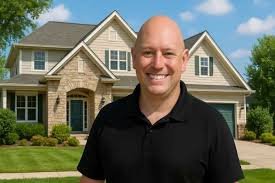
This guide is authored by Duane Buziak, Mortgage Maestro, NMLS #1110647 of Coast2Coast Mortgage LLC, NMLS #376205 — VA Broker of the Year 2024 & 2025, Scotsman Guide Top Originator 2025 ($44.4M) & 2026 ($51.2M), UWM PRO ELITE 2025, and Top 1% Originator Nationwide — licensed in Virginia, Florida, Tennessee, and Georgia. Whether you’re a first-time buyer in Henrico County, a veteran in Hampton Roads, a self-employed borrower in Roanoke, or a real estate investor in Richmond, the goal here is simple: give you the knowledge to make a smart, confident mortgage decision. Last reviewed September 2026 to reflect current program guidelines, the 2026 FHFA conforming loan limit ($806,500), and live market rate language.
Publisher note: The FAQ section near the end of this article should be marked up with JSON-LD FAQPage schema (schema.org/FAQPage) to enable Google rich results. Each Q&A pair in the “Structured FAQ” block qualifies.
Virginia’s Mortgage Landscape: What Every Borrower Needs to Know First
Virginia is not a one-size-fits-all mortgage market. The state spans everything from dense urban submarkets in Richmond and Chesapeake to rural communities in Goochland, Louisa, and Caroline County where zero-down USDA financing is still available. The loan program that makes sense in Short Pump may be entirely different from what works in Stafford or Lynchburg.
Let’s start with the numbers that anchor the whole conversation. For 2025, the Federal Housing Finance Agency (FHFA) sets the baseline conforming loan limit at $806,500 for a single-family home. (Source: FHFA.gov.) This matters because loans at or below this threshold qualify as conventional conforming loans, which typically carry the most favorable rates and terms. Loans above this limit enter jumbo territory, which carries different underwriting requirements and often higher rates.
In Henrico County, approximate median home prices have been running in the $390,000 to $430,000 range based on recent market data trends (verify current figures at VirginiaRealtors.org). Similar price ranges apply across Chesterfield and much of the Richmond metro. Hampton Roads markets, including Virginia Beach, Chesapeake, and Newport News, show their own pricing dynamics. In most of these markets, buyers are well within conforming loan territory, which opens the door to conventional and FHA financing with competitive terms.
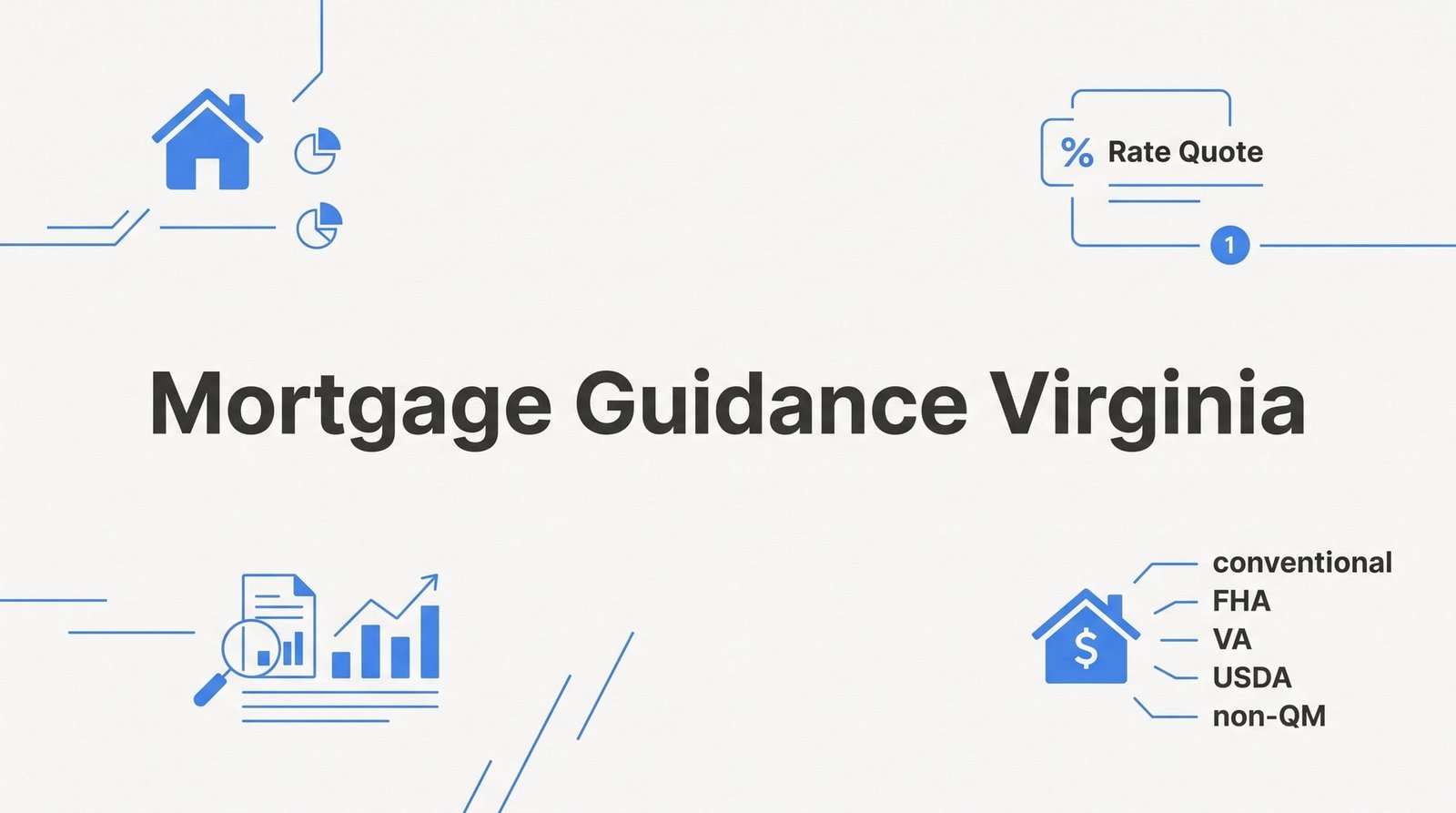
Here is how the five primary loan types available in Virginia compare at a glance:
Virginia Loan Program Comparison Table
Conventional: Minimum credit score 620+. Down payment as low as 3% (first-time buyers) or 5% (repeat buyers). Best for borrowers with solid credit, stable W-2 income, and home prices within the conforming limit. Private mortgage insurance (PMI) required below 20% down but can be removed once equity reaches 20%.
FHA: Minimum credit score 580 for 3.5% down; 500–579 with 10% down per HUD guidelines. Best for buyers with lower credit scores, limited down payment savings, or higher debt-to-income ratios. Mortgage insurance premium (MIP) is required for the life of the loan in most cases. Source: HUD.gov.
VA: No official minimum credit score set by the VA; lenders apply their own overlays, often 580–620. Zero down payment required for eligible veterans, active-duty service members, and surviving spouses. No monthly mortgage insurance. Source: VA.gov. Particularly relevant in Hampton Roads, Fredericksburg, Stafford, and Prince William County given the high concentration of military personnel.
USDA: Typically requires 640+ credit score for automated underwriting. Zero down payment for eligible rural and semi-rural properties. Income limits apply. Relevant for buyers in Goochland, Louisa, Caroline County, Lake Anna, and parts of Albemarle. Verify current property eligibility at the USDA Eligibility Map.
Non-QM / Jumbo: Credit score flexibility varies by product, with some programs accommodating scores in the 500s. Down payment requirements range from 10% to 30%+ depending on the program. Best for self-employed borrowers, real estate investors, high-net-worth buyers above the conforming limit, or borrowers with non-traditional income. No government backing; underwritten to investor guidelines.
Understanding which tier you fall into is the first step. The second step is understanding what your credit and income profile actually qualifies you for, which is where most borrowers get surprised.
Credit Scores, DTI, and the Real Qualifying Math
Credit scores are the first filter most lenders apply, but they’re not the whole picture. Debt-to-income ratio (DTI) is equally important, and many borrowers who have decent credit still get turned down because their DTI is too high for a particular program. Let’s break both down with actual numbers.
Credit Score Thresholds by Loan Type
Per HUD guidelines, FHA loans accept a minimum score of 580 for 3.5% down and 500–579 for 10% down. Conventional loans typically require a minimum of 620, though better pricing kicks in at 680 and above. VA loans have no official floor, but most lenders set overlays between 580 and 620. Non-QM programs can accommodate scores in the 500s, depending on the product and compensating factors like reserves and down payment size.
DTI: A Worked Example Using a Midlothian Purchase
Debt-to-income ratio has two components. The front-end ratio covers only your proposed housing payment (principal, interest, taxes, and insurance, known as PITI). The back-end ratio adds all monthly debt obligations on top of that.
Here is a worked example for a $400,000 home purchase in Midlothian:
Borrower gross monthly income: $8,000
Proposed PITI (principal, interest, taxes, insurance): $2,000
Front-end DTI: $2,000 ÷ $8,000 = 25% (within the conventional guideline of approximately 28%)
Total monthly debts (PITI + $400 car payment + $200 student loan): $2,600
Back-end DTI: $2,600 ÷ $8,000 = 32.5% (well within conventional guidelines of 36%–45% depending on compensating factors)
FHA allows back-end DTI up to approximately 57% with compensating factors, per HUD guidelines. VA loans use a residual income analysis rather than a strict DTI cap, which can be advantageous for veterans with higher debt loads. Non-QM programs vary widely by investor.
The takeaway: a borrower who looks marginal under conventional guidelines may qualify comfortably under FHA or VA. This is exactly why working with someone who has access to multiple programs matters.
The NoTouch Credit Advantage: Pre-Qualifying Without a Hard Pull
Here is something most borrowers don’t know: you don’t have to let a lender pull your credit and potentially ding your score just to find out if you qualify. Using VantageScore 4.0, a soft inquiry can be used for pre-qualification purposes without triggering a hard inquiry on your credit report. (Source: VantageScore.com.)
This matters in Virginia’s competitive purchase markets. If you’re exploring your options in Richmond, Glen Allen, or Chesapeake, you want to understand your buying power before you start submitting applications. A soft pull gives you that clarity without the credit score impact. It’s called NoTouch Credit, and it’s how smart borrowers start the process.
Rate Shopping in Virginia: The Math Behind the Decision
A quarter-point difference in your mortgage rate sounds small. Over 30 years on a $400,000 loan, it is anything but. Here is the actual math, presented clearly so you can apply the same logic to any rate quote you receive.
Rate and Payment Comparison: $400,000 Loan, 30-Year Fixed
Rate A: 6.75% | Monthly principal and interest: $2,594 | Total interest paid over 30 years: $534,057
Rate B: 7.00% | Monthly principal and interest: $2,661 | Total interest paid over 30 years: $558,036
Monthly savings at Rate A vs. Rate B: $67 per month
Total savings at Rate A over 30 years: approximately $23,979
Note: These are illustrative calculations using fixed rates for comparison purposes. Actual rates vary daily and by borrower profile. Verify current market rates at the time of application.
Breakeven Math: Should You Pay Points?
Now let’s say Rate A (6.75%) requires paying one discount point upfront. On a $400,000 loan, one point equals $4,000.
Monthly savings: $67
Upfront cost of the point: $4,000
Breakeven calculation: $4,000 ÷ $67 = approximately 60 months (5 years)
Interpretation: If you stay in the home or keep the loan for longer than five years, paying the point saves you money. If you sell, refinance, or pay off the loan before five years, you do not recoup the upfront cost. This is the breakeven analysis every Virginia borrower should run before agreeing to pay points.
Rate vs. APR: Why You Must Compare Loan Estimates
The interest rate is not the full story. The Annual Percentage Rate (APR) includes the interest rate plus lender fees, origination charges, and discount points, expressed as a single annualized cost. A lender offering a lower rate but charging high origination fees may actually be more expensive than a lender with a slightly higher rate and minimal fees.
The CFPB’s standardized Loan Estimate form (required under TRID rules, delivered within three business days of application) puts every fee on the same page in the same format for every lender. (Source: CFPB.gov.) Comparing Loan Estimates side by side is the only apples-to-apples way to evaluate competing offers. Look specifically at Section A (origination charges), Section B (services you cannot shop for), and the APR field.
A broker who submits your file to hundreds of lenders creates a competitive environment that a single-lender institution structurally cannot replicate. Before accepting any rate quote, ask: “Can I see the full Loan Estimate?” If a lender hesitates, that tells you something. Use a mortgage rate comparison strategy to evaluate every offer on equal footing.
Broker vs. Direct Lender: An Honest Side-by-Side for Virginia Borrowers
This is one of the most important decisions a Virginia borrower makes, and it’s often made without enough information. Here is a direct comparison, structured fairly and without disparaging any competitor. Understanding how to choose a mortgage lender before you start shopping can save you thousands.
Head-to-Head Comparison Table
Better Mortgage Rates (Duane Buziak, NMLS#1110647): Independent mortgage broker. Access to hundreds of wholesale lenders. NoTouch soft credit pull pre-qualification. Credit scores to 500 (FHA) and Non-QM programs. Bank statement loans and DSCR investor loans available. Licensed VA, FL, TN, GA. Average close times competitive with retail lenders.
Rocket Mortgage: Large national direct lender. Single-lender product shelf. Strong digital experience. Primarily conventional, FHA, and VA. Limited Non-QM flexibility. One set of rates and products.
Movement Mortgage: Regional and national retail lender. Known for fast-close programs. Single-lender shelf. Conventional, FHA, VA products. Limited Non-QM availability.
PrimeLending: National retail mortgage lender. Wide product menu within its own shelf. Conventional, FHA, VA, and some jumbo. Single-lender model.
CapCenter: Virginia-based lender with a low-fee model. Primarily conventional, FHA, and VA. Single-lender shelf. Competitive on fees for qualifying borrowers.
Alcova Mortgage: Virginia-based retail lender with strong local presence. Conventional, FHA, VA products. Single-lender shelf. Well-regarded for local market knowledge.
The structural difference is straightforward. A direct lender or retail bank offers its own products at its own rates. A broker submits your file to multiple wholesale lenders simultaneously, creating price competition. Neither model is inherently better for every borrower, but for borrowers who have been turned down, have non-traditional income, or want the broadest possible rate comparison, the broker model provides options that a single-lender shelf cannot.
When a Bank Turndown Isn’t the End of the Road
Many Virginia borrowers assume that a decline from their bank or credit union means they don’t qualify for a mortgage. That is frequently not the case. Banks and credit unions operate on their own overlays, which are often stricter than the actual guidelines for FHA, VA, or Non-QM programs. A borrower with a 560 credit score may be declined by a retail bank but qualify for an FHA loan with 10% down. A self-employed borrower turned down for insufficient W-2 income may qualify through a bank statement loan program.
Speed to Close in Virginia’s Competitive Markets
In Richmond, Short Pump, Glen Allen, Chesapeake, and Virginia Beach, multiple-offer situations are common. A seller choosing between two offers will often favor the buyer whose lender has demonstrated a faster close timeline. Before selecting any lender, ask specifically: “What is your average days to close on a purchase loan?” A lender who cannot answer that question clearly is a lender who hasn’t measured it. Fastest close times are a real competitive advantage, and it’s a fair question to ask any mortgage professional you’re evaluating.
Specialty Loan Programs: When Standard Financing Doesn’t Fit
Not every Virginia borrower fits the W-2, 680-credit-score, 20%-down template. A significant portion of buyers and investors need programs designed for their actual financial situation. Here is what’s available and who it’s designed for.
Bank Statement Loans for Self-Employed Borrowers
If you are self-employed, a business owner, a freelancer, or a contractor, your tax returns may significantly understate your actual cash flow because of legal deductions. A bank statement loan uses 12 to 24 months of personal or business bank statements to calculate qualifying income instead of W-2s or tax returns. This is a Non-QM product, meaning it is not backed by Fannie Mae, Freddie Mac, FHA, or VA. It is underwritten to private investor guidelines. Down payment requirements are typically higher than conventional loans, and rates reflect the additional risk, but for the right borrower, it is the difference between qualifying and not qualifying. Virginia’s self-employed mortgage options go well beyond what most retail lenders can offer.
DSCR Loans for Real Estate Investors in Virginia
Debt Service Coverage Ratio (DSCR) loans are designed for real estate investors purchasing rental properties in markets like Richmond, Roanoke, Lynchburg, and Hampton Roads. Instead of qualifying based on personal income, the loan qualifies based on whether the property’s rental income covers the debt service. A DSCR of 1.0 means the property’s rent exactly covers the mortgage payment. Most programs prefer a DSCR of 1.1 or higher. This product is not universally available at retail lenders, and it is particularly useful for investors who have multiple properties and whose personal income documentation has become complex. Explore the full range of investment property financing strategies available in Virginia.
USDA Loans in Virginia’s Rural Communities
USDA Single Family Housing Guaranteed Loans offer zero-down financing for eligible properties in designated rural and semi-rural areas. In Virginia, communities including parts of Goochland, Louisa, Caroline County, Ashland, Lake Anna, and Albemarle may qualify, though eligibility boundaries change periodically. Income limits apply and vary by county and household size. To verify whether a specific property address is eligible, use the official USDA eligibility map at eligibility.sc.egov.usda.gov. (Source: USDA.gov.) Understanding the full scope of USDA loan benefits can help rural Virginia buyers take advantage of this zero-down program.
These specialty programs represent real pathways for borrowers who have been told “no” by traditional lenders. They are not guaranteed outcomes, and individual qualification varies. But knowing they exist is the first step toward exploring them.
Questions That Reveal the Truth About Any Lender
Before you commit to any lender or broker, ask these questions directly. The answers will tell you more than any marketing material. Preparing thoroughly before your first meeting is exactly what a mortgage consultation in Virginia should accomplish.
1. How many lenders do you submit to? A broker should be able to name a range. A direct lender’s honest answer is one.
2. Do you use a hard or soft credit pull for pre-qualification? A soft pull protects your score during the shopping phase. If a lender requires a hard pull just to give you a rate estimate, ask why.
3. What is your average days to close on a purchase loan? Get a specific number, not a vague “we close fast.”
4. Can you accommodate credit scores below 620? If yes, which programs and at what minimum score?
5. What are your lender fees and origination charges? Ask to see a fee worksheet before you apply.
6. Do you offer bank statement loans or DSCR loans? If you are self-employed or an investor, this is a critical question.
7. What happens if I get turned down by your automated underwriting system? A good lender has a plan B.
8. Are you a broker or a direct lender? Know who you’re working with and what that means for your options.
9. Can you match or beat a competing Loan Estimate? A broker with access to hundreds of lenders should be able to engage in a rate challenge.
10. What is included in my APR vs. my quoted rate? Make sure you understand the full cost of the loan, not just the headline number.
Structured FAQ: Common Virginia Mortgage Questions
Q: How do I get pre-approved without hurting my credit score?
A: Ask for a soft pull pre-qualification using VantageScore 4.0. This does not trigger a hard inquiry and does not impact your credit score. It gives you a meaningful picture of your buying power before you formally apply.
Q: What credit score do I need to buy a home in Virginia?
A: It depends on the loan type. FHA accepts scores as low as 500 (with 10% down) per HUD guidelines. Conventional loans typically require 620+. VA loans have no official floor but lenders set overlays. Non-QM programs can go lower with compensating factors.
Q: What is the difference between pre-qualification and pre-approval?
A: Pre-qualification is a preliminary assessment based on stated information, often using a soft credit pull. Pre-approval involves a full application, income and asset documentation review, and typically a hard credit pull. Sellers and agents in Virginia’s active markets generally prefer a pre-approval letter. Learn exactly how to get prequalified for a mortgage without damaging your credit score.
Q: Can I get a mortgage after a bank turndown?
A: Often, yes. Banks and credit unions apply their own overlays that are stricter than government or Non-QM guidelines. FHA, VA, USDA, and Non-QM pathways may be available even after a retail bank decline. The key is working with someone who has access to multiple programs and lenders.
Q: What is the conforming loan limit in Virginia for 2025?
A: The FHFA baseline conforming loan limit for 2025 is $806,500 for a single-family home. Source: FHFA.gov.
Putting It All Together: Your Virginia Mortgage Roadmap
Virginia homebuyers and homeowners have more options than most realize. The conforming loan limit gives most buyers access to conventional financing. FHA, VA, and USDA programs fill the gaps for buyers with lower credit scores, military service history, or rural property locations. Non-QM programs serve the self-employed, the investor, and the borrower whose financial picture doesn’t fit a standard template.
The quality of your mortgage guidance directly affects the cost and outcome of your loan. A 0.25% rate difference on a $400,000 loan is nearly $24,000 over 30 years. A lender who can’t access multiple programs may not be able to offer you the loan you actually qualify for. And a hard credit pull during early shopping can cost you points you can’t afford to lose in a competitive market.
Working with a licensed broker who accesses hundreds of lenders, protects your credit during exploration with a soft pull, and has deep knowledge of Virginia’s diverse markets, from Short Pump and Glen Allen to Virginia Beach and Lake Anna, gives you a structural advantage that a single-lender shelf simply cannot provide.
Whether you’re starting your home search, comparing rates on a refinance, or looking to leverage a cash-out refinance up to 90% of your home’s value, the next step is getting clear on your options without any obligation or credit impact. Learn more about our services and explore what’s available for your specific situation in Virginia, Florida, Tennessee, or Georgia.
To reach Duane Buziak directly with questions, visit DuaneBuziakMortgageMaestro.com or call (804) 212-8663.
Legal Disclaimer: This article is for educational purposes only and does not constitute financial, legal, or tax advice. Mortgage rates, loan program guidelines, and eligibility requirements are subject to change without notice and vary based on individual borrower qualifications, property type, and market conditions. Not all borrowers will qualify for all programs. Conforming loan limits, credit score thresholds, and program guidelines cited in this article are based on sources current at time of writing; verify all figures before relying on them for financial decisions. Henrico County median price ranges are approximate and based on recent market data trends; verify current figures at VirginiaRealtors.org. Rate and payment calculations are illustrative only and do not represent a rate quote or commitment to lend. Equal Housing Lender.
For current program guidelines, consult CFPB.gov, HUD.gov, VA.gov, or USDA.gov.
Duane Buziak, Mortgage Maestro | NMLS: 1110647 | Licensed in VA · FL · TN · GA | VA Broker of the Year 2024–2025 | Top 1% Nationwide | Coast2Coast Mortgage | DuaneBuziakMortgageMaestro.com | (804) 212-8663